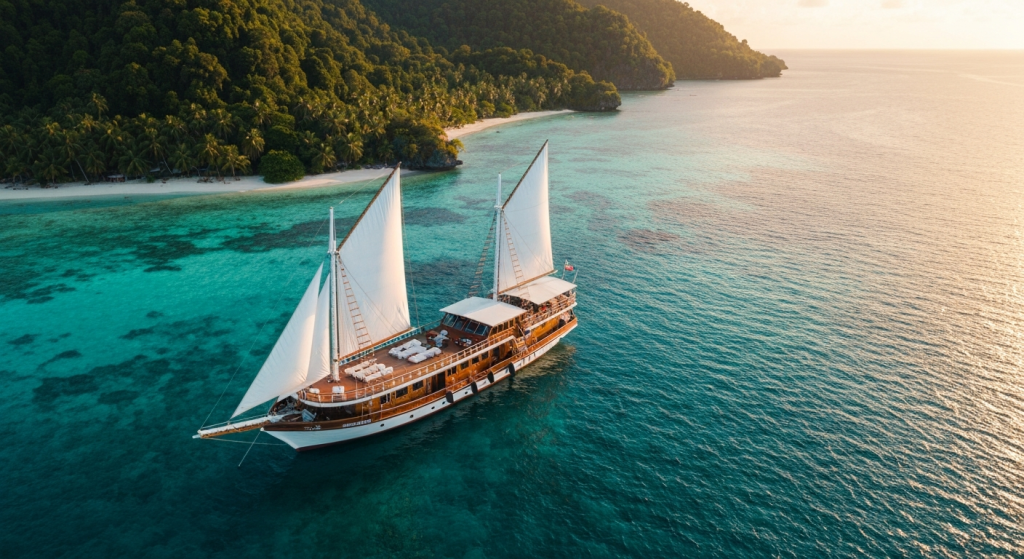
Capturing the unique environments of the Spice Islands, also known as Maluku, requires specialized photography equipment for both underwater and aerial perspectives. This region, comprising over 1,000 islands, presents distinct challenges and opportunities for photographers seeking to document its rich biodiversity and historical landscapes. Professional gear ensures high-quality results whether documenting the vibrant coral reefs below the surface or the ancient colonial forts from above. The Banda Sea, for example, hosts over 3,000 species of fish and 600 species of coral, making it a significant photographic subject [Source: Indonesia.travel].
Underwater Photography Gear for the Banda Sea
Underwater photography in the Banda Sea demands robust and specialized equipment to withstand depths and saltwater. A dedicated underwater camera system typically consists of a camera body, a waterproof housing, and external strobes or video lights. High-end mirrorless cameras like the Sony A7R V or Canon R5, paired with housings rated to 60 meters, deliver professional-grade images. These cameras often feature 45-megapixel sensors, capturing intricate details of marine life. For more compact options, cameras like the Olympus TG-6, waterproof to 15 meters without a housing, offer a durable entry point at around $450 USD. External strobes, such as the Ikelite DS161 or Inon Z-330, provide crucial light, correcting color loss at depths beyond 5 meters. These strobes often have guide numbers exceeding 24 (ISO 100, meters) and recycle times under 1.5 seconds.
Lens selection is also critical for underwater environments. Wide-angle lenses, such as a 16-35mm equivalent, are effective for reefscapes and large marine animals like manta rays or hammerhead sharks, which are sighted in the Banda Sea during migratory periods. Macro lenses, typically 60mm or 100mm equivalents, are essential for capturing small critters like pygmy seahorses and nudibranchs, abundant in Maluku’s diverse ecosystems. A standard setup, including a camera, housing, two strobes, and ports, can cost between $5,000 and $15,000 USD. This investment supports capturing the region’s vast underwater biodiversity, which includes unique species like the Ambon scorpionfish.
Drone Photography in Maluku’s Archipelago
Aerial photography provides unparalleled perspectives of Maluku’s volcanic islands, pristine coastlines, and historical sites like Fort Belgica on Banda Neira. Modern drones, such as the DJI Mavic 3 Pro or DJI Air 3, offer excellent image quality and flight stability. The Mavic 3 Pro, for instance, features a 4/3 CMOS Hasselblad camera with a 20-megapixel sensor, capable of recording 5.1K video at 50 frames per second. Its flight time extends up to 43 minutes, and its O3+ transmission system ensures a range of up to 15 kilometers, crucial for surveying expansive island vistas. The DJI Mini 4 Pro, weighing under 249 grams, avoids many strict drone registration requirements in various countries, making it a convenient travel option, though its sensor is smaller at 1/1.3-inch CMOS.
Operating drones in Indonesia requires adherence to specific regulations. Pilots must register drones weighing over 250 grams with the Directorate General of Civil Aviation. Permits are necessary for flights near airports, military installations, or over sensitive cultural sites. Respecting local communities and privacy during flights is paramount. For example, capturing the historical significance of the Banda Islands, designated a UNESCO World Heritage tentative site for its spice trade heritage, offers a unique aerial storytelling opportunity [Source: UNESCO World Heritage Centre]. A drone setup, including extra batteries and a robust carrying case, typically costs between $1,000 and $3,000 USD.
Protecting Photography Gear in a Marine Environment
The tropical marine environment of the Spice Islands presents significant challenges for sensitive photography equipment. High humidity, saltwater spray, and fine sand are constant threats. Waterproof cases, like those from Pelican or Nanuk, are indispensable for transporting gear between locations on a sailing vessel. These cases, often rated IP67, protect against dust and immersion in water up to 1 meter for 30 minutes. Desiccants, such as silica gel packets, stored within camera bags and housings, absorb moisture and prevent condensation buildup, which can fog lenses and damage electronics. Regular cleaning with fresh water after saltwater exposure is crucial for all external components, especially O-rings on underwater housings and drone propellers. A small, portable air blower removes dust and sand particles effectively.
Spare parts and a comprehensive toolkit are essential for any expedition. This includes extra O-rings for underwater housings, lens cleaning kits, small screwdrivers, and basic repair tools. Batteries for both cameras and drones should be stored in fire-resistant bags and monitored carefully, especially during charging. Many liveaboards offer 220V power outlets, so appropriate adapters are necessary for international travelers. Carrying a minimum of three sets of batteries for drones, providing over two hours of flight time, ensures sufficient aerial coverage. Similarly, multiple camera batteries, each offering approximately 200-300 shots, are advisable for extended shooting days.
Ethical Photography and Local Engagement
Responsible photography in the Spice Islands involves both environmental and cultural considerations. When photographing marine life, maintaining a respectful distance and avoiding harassment of animals is critical. Touching corals or disturbing nesting sites can cause irreversible damage to fragile ecosystems. Many operators on liveaboard trips enforce strict no-touch policies for marine environments. For aerial photography, understanding local customs and obtaining permission before flying over villages or private property is a sign of respect. Some communities may prefer not to be filmed or photographed without prior consent. A local guide can facilitate these interactions and provide valuable cultural context, enhancing the photographic experience while ensuring ethical practices. This approach aligns with the principles of sustainable tourism promoted by the Indonesian Ministry of Tourism and Creative Economy (kemenparekraf.go.id).
Power Management and Data Backup on a Liveaboard
Extended sailing trips in the Spice Islands necessitate robust power management and data backup strategies. Most liveaboard vessels provide charging stations, but power availability can be limited, especially for multiple devices. Portable power banks with capacities exceeding 20,000 mAh are invaluable for recharging camera batteries, drone batteries, and mobile devices. Solar chargers can supplement power, though their efficiency varies with cloud cover. For data backup, portable SSDs (Solid State Drives) with capacities of 2TB or more offer fast and reliable storage. Carrying at least two external drives and backing up images daily minimizes the risk of data loss. A laptop with sufficient processing power is useful for initial culling and basic editing of RAW files. Ensuring all charging cables and power adapters are compatible with the vessel’s electrical system (often 220-240V, Type C/F outlets) prevents charging issues.
Recommended Photography Gear for Spice Islands Sailing
Planning photography for a Spice Islands sailing adventure requires careful consideration of both budget and desired output quality. This list outlines essential gear categories for capturing both underwater and aerial scenes:
- **Underwater Camera System:** Mirrorless camera (e.g., Sony A7R V, Canon R5, Nikon Z7 II) or compact (e.g., Olympus TG-6) with a dedicated underwater housing (rated 60m+).
- **External Strobes/Video Lights:** Two strobes (e.g., Ikelite DS161, Inon Z-330) or powerful video lights for color correction and illumination.
- **Underwater Lenses:** Wide-angle rectilinear lens (16-35mm equivalent) for reefscapes, and a macro lens (60mm or 100mm equivalent) for small subjects.
- **Drone:** DJI Mavic 3 Pro or DJI Air 3 for professional aerials, or DJI Mini 4 Pro for a lightweight, travel-friendly option (ensure local regulations are met).
- **Protective Cases:** Hard-shell waterproof cases (e.g., Pelican 1510, Nanuk 935) for camera gear and drone.
- **Moisture Control:** Silica gel packets, desiccant beads, and absorbent cloths for humidity management.
- **Power Solutions:** Multiple spare batteries for cameras and drones, portable power banks (20,000mAh+), and international travel adapters.
- **Data Storage:** At least two portable SSDs (2TB minimum each) for redundant backups, plus multiple high-speed SD/CFexpress cards.
- **Cleaning Supplies:** Lens cleaning kits, air blower, microfiber cloths, O-ring grease, and fresh water rinse bottles.
- **Dive/Snorkel Mask Adapter:** For attaching action cameras (e.g., GoPro Hero 12) directly to masks for hands-free video.
- **Lightweight Tripod:** For low-light landscape shots or timelapses on deck (optional but recommended).
Choosing Gear Based on Your Spice Islands Adventure
The optimal photography gear for a Spice Islands sailing trip depends heavily on your specific itinerary and photographic interests. If your primary focus is diving in the Banda Sea, investing in a high-quality underwater setup is paramount. For those interested in documenting the historical aspects and dramatic landscapes from above, a capable drone is indispensable. Mid-range sailing trips in the $4,500-$7,500 USD range often attract experienced travelers who prioritize unique experiences; a $5,000-$10,000 USD photography kit complements such an adventure, allowing for detailed capture of both marine biodiversity and cultural sites. Consider the weight and bulk of your equipment, as space on Spice Islands liveaboards can be limited. Practicality and durability are as important as image quality in these remote locations.
Preparing thoroughly for photography in the Spice Islands ensures that you return with compelling images and videos. The region’s vibrant marine life and historical landscapes offer unparalleled visual storytelling opportunities. Understanding the technical requirements, environmental challenges, and ethical considerations for both underwater and aerial photography contributes to a successful expedition. For more details on routes and optimal photographic seasons, consult our Ambon–Banda–Halmahera Sailing Routes, Weather & Prices page. Documenting the unique beauty of Maluku with appropriate gear enhances the entire experience.