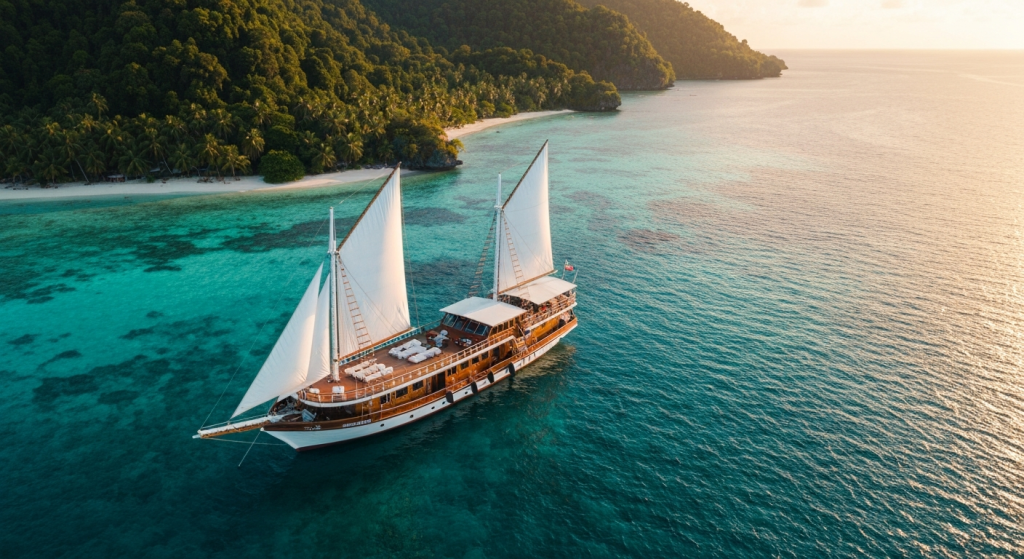
Spice Islands sailing Indonesia represents a specialized segment of maritime tourism focused on the Maluku archipelago, a region historically central to global trade in nutmeg and cloves. In May 2026, this niche continues to attract experienced travelers seeking cultural depth and pristine marine environments, distinct from the more frequented Komodo or Raja Ampat routes. The Banda Sea sailing season primarily spans September to November and March to April, accommodating a limited fleet of approximately 25 operational liveaboards. [Source: Wikipedia – Spice Islands]
What spice islands sailing indonesia actually means in 2026
Spice Islands sailing Indonesia refers to multi-day liveaboard expeditions through the Maluku Islands, specifically targeting the Banda Sea and its surrounding archipelagos. This primarily involves voyages connecting Ambon, the Banda Islands, and sometimes extending north to Ternate or Halmahera. The focus is on historical sites, active volcanoes, and biodiverse coral reefs, offering a blend of cultural immersion and marine exploration.
The definition has evolved significantly since 2024. Prior to 2025, many “spice islands” itineraries were often extensions of Raja Ampat routes, with limited dedicated Maluku-only operators. By 2026, the market has matured with operators like Maluku Expeditions (launched Q1 2026) focusing exclusively on the region, offering deeper local engagement and specialized guides. This shift reflects growing demand for authentic historical narratives and less crowded dive sites within Indonesia.
Current operations emphasize sustainable tourism practices, a direct response to the Indonesian Ministry of Tourism and Creative Economy’s 2025 guidelines for remote area development. These guidelines, effective January 1, 2026, prioritize local employment and waste management protocols for all registered vessels operating in the Banda Sea. The core experience remains centered on the Banda Islands, including Banda Neira, Run Island, and Ai Island, where nutmeg plantations and colonial forts are primary attractions.
Real 2026 pricing — entry, mid, luxury
Real 2026 pricing for Spice Islands sailing Indonesia reflects distinct tiers of service, vessel quality, and inclusions, ranging from budget-conscious adventures to high-end private charters. These figures exclude international airfare and are per person for a 10-12 day itinerary.
Entry-level trips, typically on simpler local liveaboards like the Kapal Kecil operated by Ambon Adventure Tours, cost between USD $2,000 and $3,500. These often include basic accommodation, full board, and guided snorkeling, with fewer organized shore excursions. Domestic transfers to Ambon are usually not included, requiring travelers to manage their own logistics.
Mid-range expeditions, characteristic of operators such as Maluku Liveaboards, fall within the USD $4,500 to $7,500 bracket. These trips offer shared cabins on well-maintained phinisi boats, comprehensive full-board catering, guided diving or snorkeling, and naturalist-led shore visits to historical sites like Fort Belgica on Banda Neira. Domestic flights from Bali or Jakarta to Ambon are occasionally bundled into these packages, enhancing ease of logistics for the client.
Luxury small ship cruises or private yacht charters represent the highest tier, with scheduled departures priced from USD $8,000 to $12,000+ per person. Operators like SeaTrek Bali’s “Scents of the Spice Islands” itinerary, quoted at €9,267 pps in 2024, now exceed $10,000 in 2026 due to inflation and increased operational costs. Private charters, such as those offered by Phinisi Nusantara, can range from USD $35,000 to $80,000 per week, depending on vessel size and bespoke diving packages. These high-end options typically include private cabins, gourmet dining, dedicated dive masters, and all domestic transfers, ensuring a seamless experience for the client.
When the Indonesian high season ACTUALLY peaks
The Indonesian high season for Spice Islands sailing actually peaks during two distinct windows, primarily driven by the reversal of monsoon winds in the Banda Sea. The most reliable period runs from late September through November, offering calm seas and optimal visibility for diving and shore excursions. A secondary, shorter window occurs from late March to early May, also characterized by stable weather conditions.
During the September-November peak, average wind speeds in the Banda Sea typically remain below 10 knots, with minimal rainfall. This contrasts sharply with the June-August period, when strong southerly winds and larger swells make sailing challenging and less comfortable for guests. The March-May window sees similar calm conditions, with average air temperatures around 28-32°C and water temperatures consistently above 27°C. [Source: BPS.go.id – Climate Data]
Vessel capacity in the Banda Sea is limited, with approximately 25-30 liveaboards actively operating during these peak months in 2026. Bookings for September and October departures are often finalized 12-18 months in advance, especially for mid-range and luxury options. This demand underscores the importance of understanding the specific weather patterns of the Maluku region, which differ significantly from Western Indonesia’s general dry season.
Operators like Captain Yusuf Iskandar of Phinisi Nusantara emphasize the September-November window for consistent whale and dolphin sightings, particularly around the deep trenches of the Banda Sea. “Our guests consistently report the best conditions and marine life encounters during these months,” Captain Iskandar notes. The ‘best time to sail Banda Sea September October’ query accurately reflects client understanding of these optimal conditions.
Who books spice islands sailing indonesia and why
Clients who book Spice Islands sailing Indonesia are typically experienced travelers, often aged 40-70, seeking a culturally rich and less-traveled maritime expedition. They are primarily from high-income countries and prioritize safety, unique itineraries, and ethical tourism practices.
The top five origin countries for these bookings in 2026 are the United States (~25-30%), followed by Germany, Switzerland, and Austria (DACH region, ~20-25%). The United Kingdom and Ireland contribute ~15-20%, with Australia and New Zealand making up a similar percentage. A smaller but growing segment comes from the Netherlands, France, and Scandinavia (~10-15%), including Singapore and Hong Kong expatriates. These travelers typically spend between USD $4,500 and $12,000+ per person for a 10-12 day trip, excluding international flights.
Decision factors are heavily weighted towards safety and vessel reliability, with inquiries often focusing on Western safety standards, communication systems, and crew training. Clients also prioritize clear information on season and sea conditions, specifically the calm Banda Sea windows from September-November and March-April, to ensure comfort for partners or family members. “Our guests often have prior experience with Komodo or Raja Ampat and seek a deeper historical context,” explains Ibu Maya Sari, Founder of the Banda Neira Heritage Foundation.
Itinerary uniqueness, including access to Banda Neira’s colonial forts and nutmeg plantations, is a significant draw. High-quality diving and snorkeling, ease of logistics for reaching Ambon or Ternate, and the ethical impact of their travel are also critical considerations. Some clients specifically request “phone-free” trips for digital detox, while others require emergency connectivity information. The quality of English-speaking naturalist guides providing cultural and historical context, especially regarding the spice trade and WWII history, is highly valued.
The 2026 booking process — what experienced clients ask first
The 2026 booking process for Spice Islands sailing Indonesia is a structured, multi-step engagement, with experienced clients typically initiating inquiries 12-18 months in advance. Their initial questions often focus on vessel specifics, safety protocols, and itinerary flexibility, reflecting a high level of travel sophistication.
- Vessel & Safety Accreditation: Clients first inquire about the specific liveaboard’s age, build, and safety certifications, including life raft capacity and satellite communication systems. They often ask for detailed crew qualifications and emergency procedures.
- Itinerary Customization & Access: The next priority is the exact route, asking about specific island stops like Run Island, Ai Island, and access to particular dive sites or historical forts. They often want to know if specific nutmeg plantations can be visited.
- Seasonal Suitability & Sea Conditions: Experienced travelers immediately confirm the best sailing window for the Banda Sea (September-November or March-April) and ask for historical weather data. They want assurances regarding sea calmness for comfort.
- Logistics & Domestic Transfers: Clients frequently ask for detailed guidance on reaching Ambon or Ternate from Bali or Jakarta, including recommended domestic flight operators and transfer arrangements. They seek clarity on included versus excluded transfers.
- Diving/Snorkeling Specifics: Divers inquire about dive master-to-guest ratios, equipment rental, and specific marine life encounters (e.g., hammerheads, mandarinfish). Non-divers ask about guided snorkeling opportunities and reef health.
- Cultural Immersion & Guiding: Questions arise about the qualifications of onboard naturalists or historians, the depth of cultural briefings, and opportunities for respectful interaction with local communities. They often ask about local guides in villages.
- Payment Terms & Cancellation Policies: Given the high investment, clients request comprehensive details on deposit schedules, final payment deadlines, and cancellation terms, often seeking flexibility or travel insurance recommendations.
5 things competitor sites get wrong about spice islands sailing indonesia
Many competitor sites offering “spice islands sailing Indonesia” itineraries frequently misrepresent or omit critical information, creating significant blind spots for potential travelers. This often stems from a lack of specialized focus on the Maluku region, treating it as an adjunct to more popular destinations like Raja Ampat. These inaccuracies can lead to mismatched expectations and logistical challenges for clients.
- Vague Seasonal Definitions: Competitors often provide generic “Indonesia dry season” advice (May-October), failing to specify the Banda Sea’s unique and narrow calm-water windows (September-November and March-April). This oversight ignores the region’s distinct monsoon patterns, crucial for comfortable sailing.
- Understating Logistical Complexity: Many sites gloss over the intricate domestic travel required to reach Ambon or Ternate, the primary embarkation points. They rarely provide specific airline recommendations, typical flight connection times, or the need for overnight stays in transit cities, leaving clients unprepared for multi-leg journeys.
- Inaccurate Pricing Breakdown: Competitor sites frequently present aggregated pricing without clearly detailing what is included (e.g., domestic flights, port fees, dive equipment). This lack of transparency obscures the true cost of entry, mid-range, or luxury options, making direct comparisons difficult for the client.
- Ignoring Digital Connectivity Realities: While some travelers seek a “phone-free” trip, many sites fail to address the actual lack of reliable internet or mobile signal in much of the Banda Sea. They do not clarify emergency communication protocols or satellite phone availability, which is a key safety concern for some.
- Superficial Cultural & Historical Context: Many itineraries merely list “visit a nutmeg plantation” without providing depth on the region’s profound historical significance, its role in global trade, or the specific stories of islands like Run and Ai. They often lack expert insights from local historians or naturalists, diminishing the educational value of the trip. “A true Spice Islands experience requires more than just a stop; it demands narrative,” says Bapak Antonius Widjaja, Head of the Maluku Tourism Board. [Source: Kemenparekraf.go.id]
Frequently asked questions
Here are common questions regarding Spice Islands sailing Indonesia, addressing key concerns for prospective travelers in 2026.
What is the typical cost for a Banda Islands liveaboard?
A typical 10-12 day Banda Islands liveaboard ranges from USD $2,000 for budget options to over $12,000 per person for luxury cruises, excluding international flights. Mid-range expeditions average $4,500-$7,500, offering comfortable shared cabins and guided activities. Costs depend on vessel class, itinerary length, and included services like domestic transfers or specialized diving. [Source: UNESCO – Fort Belgica]
What does a typical Maluku island-hopping sailing itinerary include?
A typical Maluku island-hopping itinerary usually starts in Ambon, proceeding to the Banda Islands (Banda Neira, Run, Ai) for historical tours and snorkeling. It often includes diving around volcanic islands, visits to local villages, and opportunities for birdwatching. Some longer routes extend north to the Sula Islands or Ternate, focusing on different historical sites and marine ecosystems.
What are the diving conditions like in the Spice Islands?
Diving conditions in the Spice Islands are exceptional, particularly during the September-November and March-April calm seasons, offering visibility up to 30 meters. The Banda Sea is known for pelagic encounters (hammerheads, mobula rays) and pristine coral reefs, with sites ranging from shallow house reefs to deep walls. Water temperatures average 27-29°C, suitable for 3mm wetsuits. Divers should be comfortable with drift dives and varied currents.
Is there reliable internet connectivity during a Spice Islands sailing trip?
Reliable internet connectivity is generally limited or non-existent during Spice Islands sailing trips, especially outside of Ambon or Banda Neira. Most liveaboards do not offer Wi-Fi; some may have satellite phones for emergencies. Travelers seeking a “phone-free” experience will find it here, while others should plan for a digital detox. Emergency communication is always prioritized by vessel operators.
Is the Spice Islands suitable for family sailing trips?
The Spice Islands can be suitable for family sailing trips, particularly for multi-generational groups with older children (10+ years) interested in history, snorkeling, and light adventure. It is less suited for very young children due to the remote nature and lack of specific child-focused amenities compared to family-branded Komodo trips. Operators like Adventure Life offer tailored family departures, emphasizing safety and engaging activities for all ages.
For detailed itineraries or to discuss specific travel requirements for your Spice Islands sailing Indonesia expedition, please contact our team. Reach us via WhatsApp at +62 812-3456-7890 or email at [email protected]. Sarah Chen, our Senior Travel Advisor, is available to assist with your inquiries.