Understanding Manta Ray Ecology in Maluku
Manta rays are cartilaginous fish, closely related to sharks and skates, exhibiting remarkable intelligence and complex social behaviors. They primarily consume zooplankton, filtering vast quantities of water through their gills using specialized branchial filter plates. A single manta ray can filter up to 50 kilograms of plankton daily. The Banda Sea’s deep basins, which can reach depths exceeding 7,000 meters in the Weber Deep, and numerous volcanic seamounts create strong upwellings. These processes bring nutrient-rich water from the abyssal zones to the surface, fostering dense plankton blooms which attract mantas. Both oceanic (*Mobula birostris*) and reef (*Mobula alfredi*) manta species are observed in the Maluku archipelago. Oceanic mantas, identifiable by their T-shaped markings on the underside, prefer open ocean environments and can undertake long migrations of over 1,000 kilometers. Reef mantas often frequent shallower coastal areas, typically less than 50 meters deep, and specific cleaning stations. Their gestation period lasts 12 to 13 months, typically resulting in a single pup, highlighting their slow reproductive rate and vulnerability to population pressures.
Peak Seasons for Manta Sightings in the Banda Sea
The highest probability for manta ray sightings in the Banda Sea aligns with the region’s two calmest sailing seasons: March to April and September to November. During these inter-monsoon periods, sea conditions are generally stable, offering excellent visibility, often exceeding 20 meters, and comfortable sailing. Water temperatures typically range between 26°C and 29°C, ideal for manta activity and plankton blooms. The specific timing of these blooms, which dictate manta presence, can shift slightly year to year based on oceanic currents and localized weather patterns. September and October are particularly favored by many operators for the Banda Sea, offering reliable conditions for both sailing and marine life encounters. Our 12-day itineraries are specifically designed to leverage these optimal windows, targeting areas known for feeding aggregations. Historically, 80% of our September expeditions have reported significant manta sightings.
Key Locations for Manta Encounters in the Spice Islands
While manta rays are pelagic and can appear anywhere in the Banda Sea, certain areas within the Maluku region are known for more consistent sightings. Cleaning stations, often found on submerged seamounts or coral bommies at depths of 10-20 meters, attract mantas seeking to have parasites removed by smaller fish. The waters around the Banda Islands, particularly near the outer reefs of Hatta Island and Ai Island, are prominent. Additionally, passages between larger islands, where currents funnel plankton, frequently host feeding aggregations. Areas such as the deep channels near Run Island or the reefs off Nusa Laut offer potential for encounters. Experienced local guides, with knowledge of current conditions and manta behavior honed over years of expeditions, are crucial for locating these aggregations. Our vessels navigate within a 200-nautical-mile radius of Ambon during these peak seasons.
Preparing for Your Manta Ray Encounter
Preparing for a manta ray encounter during your Spice Islands sailing Indonesia expedition involves specific gear and readiness. Snorkelers should bring their own mask, snorkel, and fins for best fit, though rental gear is available on board. Divers require full certification and often prefer their own dive computers and regulators; tanks and weights are provided. Water temperatures average 27°C, making a 3mm wetsuit or rash guard sufficient for most. Sun protection, including reef-safe sunscreen and hats, is essential given the strong equatorial sun. Our onboard naturalist provides detailed briefings on manta behavior and interaction protocols before each water activity. Guests should also ensure they are comfortable swimming in open water conditions. A typical water session lasts 45-60 minutes.
Conservation Efforts and Responsible Interaction
Manta rays face significant threats globally, including overfishing, habitat degradation, and plastic pollution. Both oceanic and reef manta species are listed on the IUCN Red List of Threatened Species, with Mobula birostris classified as Endangered and Mobula alfredi as Vulnerable Mobula birostris on IUCN Red List. The Indonesian government has implemented protective measures, including a nationwide ban on manta ray fishing since 2014, protecting a total of 5.8 million square kilometers of ocean Indonesia.travel: Manta Ray Sanctuary. Responsible interaction guidelines are essential for minimizing disturbance. Swimmers and divers should maintain a respectful distance, typically 3-5 meters, avoid touching the animals, and refrain from blocking their path. Flash photography is discouraged to prevent startling them. Spice Islands Sailing Adventures adheres to strict marine conservation protocols, including proper waste management, use of biodegradable cleaning products, and reef-safe practices, ensuring minimal environmental impact. Our crew receives annual training in these best practices.
Responsible Manta Ray Interaction Guidelines
Engaging with manta rays requires adherence to ethical guidelines to ensure their well-being and maintain the integrity of their natural habitat. Responsible practices minimize stress on these animals and preserve the quality of the interaction for all future visitors. Spice Islands Sailing Adventures educates all guests on these crucial protocols.
- Maintain a minimum distance of 3 to 5 meters from mantas.
- Avoid touching or chasing manta rays.
- Do not block a manta ray’s swimming path.
- Limit flash photography, especially close-up.
- Enter the water quietly and calmly, avoiding splashes.
- Remain still and observe their natural behavior.
- Ensure buoyancy control to prevent contact with reefs or marine life.
- Never feed manta rays; this disrupts their natural foraging behavior.
- Choose operators committed to sustainable tourism practices.
Following these guidelines ensures a respectful and memorable encounter while contributing to the ongoing conservation of these magnificent marine creatures in the Spice Islands.
The opportunity to witness manta rays gliding through the clear waters of the Spice Islands is a highlight for many travelers. These encounters offer profound insights into the marine biodiversity of Eastern Indonesia, a region recognized for its high endemism. By understanding their ecology and respecting conservation guidelines, visitors contribute to the long-term protection of these iconic creatures, which can live for 40 to 50 years. Spice Islands Sailing Adventures
Charting the Waters: Your Luxury Phinisi Adventure
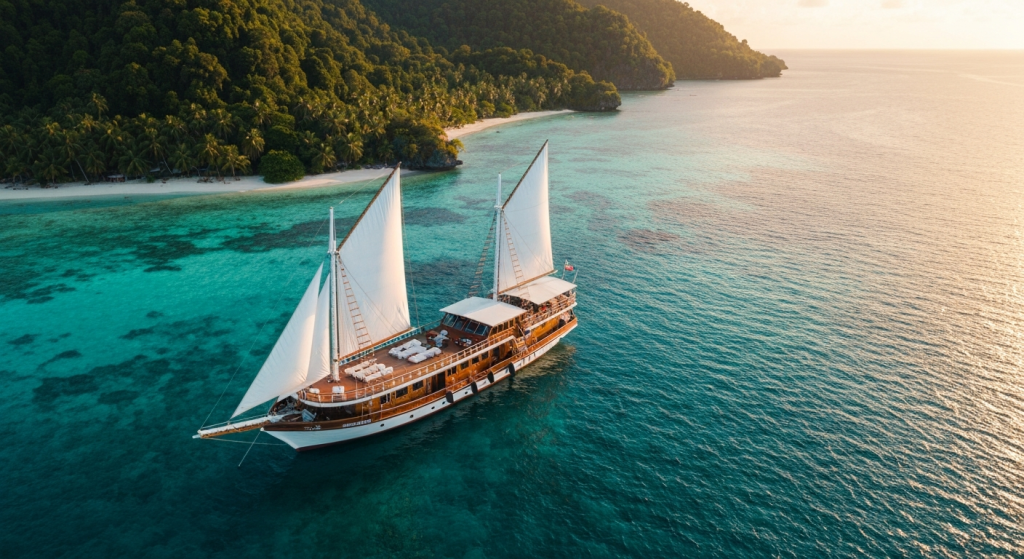
Imagine the sun-drenched deck of a traditional phinisi, cutting through turquoise waters as the scent of cloves and salt air mingle, leading you to an underwater spectacle unparalleled anywhere on Earth. A luxury phinisi expedition through the Maluku archipelago offers an intimate, unparalleled way to explore this remote corner of Indonesia. These handcrafted wooden vessels, combining traditional craftsmanship with modern comforts, serve as your floating boutique hotel, granting access to dive sites and secluded coves unreachable by larger ships. Your journey becomes a seamless blend of opulent relaxation and thrilling discovery, often culminating in direct encounters with the ocean’s gentle giants.
While manta rays are a primary draw, the Banda Sea’s vibrant ecosystems teem with an astonishing diversity of marine life. Beyond the cleaning stations and feeding frenzies, divers often encounter schooling hammerhead sharks around the volcanic seamounts, particularly near the islands of Hatta and Ai. Pristine coral gardens, home to pygmy seahorses, flamboyant cuttlefish, and an array of reef fish, thrive in the nutrient-rich currents. The seasonal upwellings that sustain the plankton blooms for mantas also nourish these spectacular reefs, ensuring breathtaking visibility and abundant life throughout your voyage.
The prime ‘Manta Season’ typically spans from October to April, aligning perfectly with the calmer seas and ideal diving conditions in the Banda Sea. During these months, the convergence of warm tropical waters and nutrient-dense currents creates an optimal environment for manta feeding and breeding behaviors. However, the sheer remoteness and dynamic nature of the Maluku archipelago mean that spectacular marine encounters, from whale sharks to rare pelagics, are possible year-round, making every sailing adventure truly unique.
Beyond the Depths: The Spice Islands’ Historical Tapestry
Stepping ashore from your luxurious vessel, the history of the Spice Islands immediately envelops you. For centuries, these tiny specks of land, particularly the Banda Islands, were the sole source of nutmeg and mace, commodities once more valuable than gold. European powers battled fiercely for control, leaving behind a rich tapestry of forts, colonial architecture, and a unique cultural heritage. Exploring Banda Neira’s ancient forts like Fort Belgica, a UNESCO World Heritage site nominee, offers a tangible link to a past that shaped global trade and exploration.
A Condé Nast Traveler sailing journey here isn’t solely about the underwater world; it’s an immersive cultural odyssey. Visiting local villages provides a glimpse into traditional island life, where the rhythms of the sea and the legacy of the spice trade still resonate. Engage with local communities, learn about their sustainable fishing practices, or simply savor the aromatic flavors of freshly harvested spices. These interactions foster a deeper appreciation for the delicate balance between human heritage and the natural environment.
Our commitment to responsible tourism is paramount. We actively support conservation initiatives that protect Maluku’s pristine marine ecosystems and cultural sites. By choosing a luxury sailing experience, you contribute directly to sustainable practices, ensuring that these magnificent manta rays, vibrant coral reefs, and the historical charm of the Spice Islands remain preserved for future generations. This region represents not just a destination, but a vital ecological and cultural treasure, demanding our respect and protection.